717.872.9100
 Millersville, PA


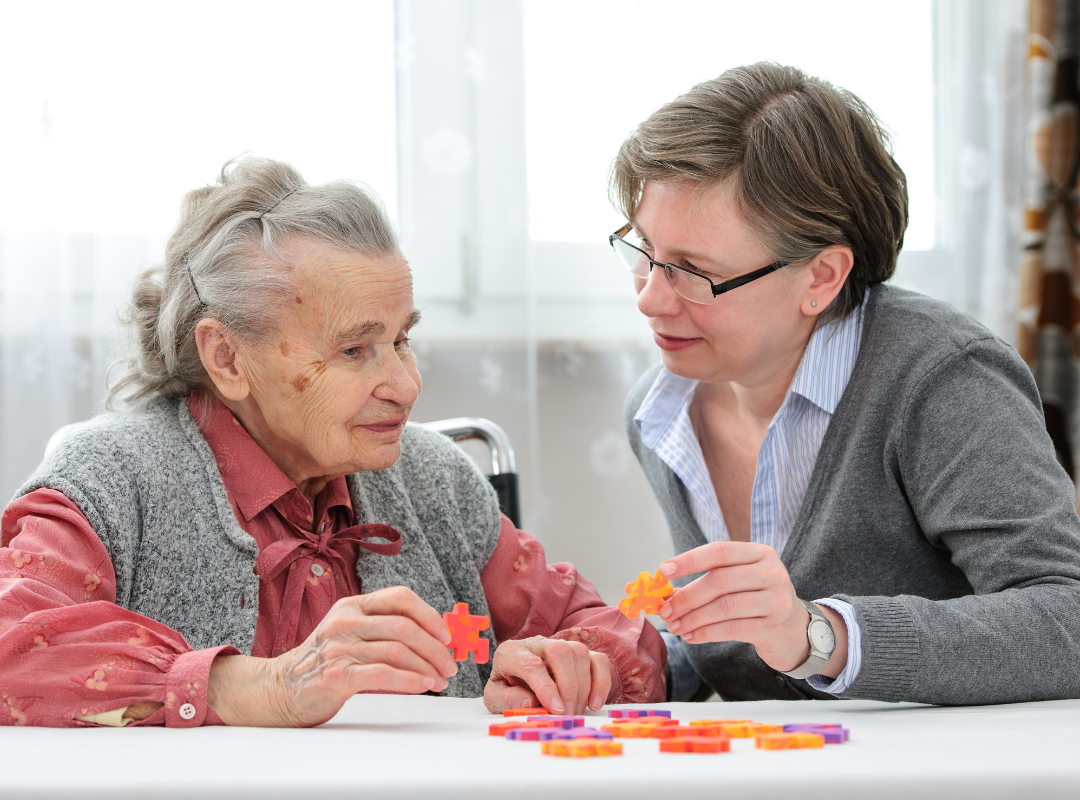
Coping with dementia parent care means adjusting how you communicate, support daily routines, respond to difficult behavior, and protect your own well-being. Calm words, simple choices, familiar patterns, and timely support can make daily life more manageable while helping you preserve a caring connection with your parent.
The guidance below covers tense moments, reassuring language, care at home, and signs that your family may need more support. Families exploring Memory Care or Personal Care in Millersville can also learn about Oak Leaf Manor South. These caregiver tips from Alzheimer ’s.gov offer additional guidance for day-to-day care.
What Coping With a Parent Who Has Dementia Really Involves
Coping with a parent who has dementia means adapting how you communicate, manage daily care, respond to changing behavior, and protect your well-being. It also means regularly deciding whether your parents’ needs can still be supported at home or whether additional care may be appropriate.
Dementia may affect memory, communication, behavior, routines, and family relationships. The 2026 Alzheimer’s Disease Facts and Figures report estimates that 7.4 million Americans age 65 and older are living with Alzheimer’s. As your parents’ needs change, reviewing available Memory Care and Personal Care options can help you understand what support may fit your family.
10 Gentle Tips for Dementia Caregivers at Home
Caring for a parent with dementia at home may feel more manageable when you focus on one moment at a time. These 10 tips for dementia caregivers can help create a calmer, more familiar daily rhythm.
- Keep daily routines familiar and consistent.
- Give one request or direction at a time.
- Offer two simple choices when possible.
- Speak slowly in a calm, respectful voice.
- Avoid arguing over dates, details, or memories.
- Choose familiar activities your parent enjoys.
- Notice what happens before difficult moments.
- Share caregiving responsibilities with others.
- Make time for sleep, meals, and personal needs.
- Review the care arrangement as needs change.
Every day may feel different. Use the ideas that fit your parents’ personality, preferences, and current needs without expecting every approach to work every time.
Words That Can Make Difficult Conversations Gentler
Short, reassuring phrases can make a conversation feel less confusing. Your tone, expression, and pace often matter as much as the words, especially when your parent feels worried, frustrated, or unsure about what is happening.
20 Things to Say to Someone With Dementia
These 20 things to say to someone with dementia can offer reassurance without placing more pressure on the moment:
- Offer reassurance: “I’m right here,” “You’re safe with me,” “Take your time,” “I can help,” and “We can do this together.”
- Give simple choices: “Would you like tea or water?” “Shall we sit here or there?” “Would you like music?” “Which shirt do you prefer?” and “Would you like to try this now or later?”
- Acknowledge and redirect: “That sounds upsetting,” “Tell me what is bothering you,” “Let’s look for it together,” “We can try again later,” and “Let’s sit somewhere quiet.”
- Support connection: “It’s good to see you,” “I’m [name], and I’m here with you,” “Let’s look at these photos,” “Thank you for telling me,” and “I’ll see you again soon.”
20 Things Not to Say to Someone With Dementia
These 20 things not to say to someone with dementia can be replaced with language that feels calmer and more respectful:
- Avoid testing memory: Replace “Don’t you remember?” “Remember me?” “I already told you,” “You should know this,” and “I just explained that” with a gentle reminder.
- Avoid blame or correction: Replace “You’re wrong,” “That never happened,” “You’re being difficult,” “That’s ridiculous,” and “You’re not making sense” with acknowledgment and a calm question.
- Avoid pressure or dismissal: Replace “Hurry up,” “Calm down,” “Stop asking,” “There’s nothing to worry about,” and “Why can’t you do this?” with reassurance and more time.
- Avoid harsh limits: Replace “You can’t do that,” “No, that’s not how it is,” “Act your age,” a painful correction, and a rushed goodbye with simple guidance, redirection, or a warm closing.
One imperfect response does not make you a poor caregiver. You can pause, adjust your words, and begin the conversation again.
How to Respond to an Angry or Aggressive Parent With Dementia
If you are trying to understand how to deal with an angry dementia parent, begin by slowing the moment down. Anger or aggression may not be a personal attack. Trying to prove a point, asking several questions, or continuing a demand can increase tension.
Pause before responding, lower your voice, and use brief sentences. Reduce distractions and notice what happened before the behavior began. Keep everyone’s immediate safety in mind, and seek qualified guidance when a reaction is sudden, escalating, or difficult to manage.

Home Care or Memory Care? Compare the Support Your Family Needs
Neither home care nor community support is right for every family. The choice depends on your parents’ daily needs, the consistency of available help, and whether the current arrangement remains manageable for everyone involved.
| Area to Consider | Questions About Care at Home | Questions About Community Support |
| Daily personal care | Can your family provide consistent assistance? | Is Personal Care or Memory Care available? |
| Medication assistance | Can medications be managed consistently? | Is medication assistance offered? |
| Household responsibilities | Who manages meals, laundry, and housekeeping? | Which daily services are available? |
| Activities and connection | Does your parent have regular ways to participate? | Are activities and social spaces available? |
| Transportation | Who provides transportation when needed? | Is on-site transportation offered? |
| Family capacity | Is the arrangement manageable over time? | Could more support ease daily responsibilities? |
| Care environment | Does the home still match your parents’ needs? | Does the available care match those needs? |
Oak Leaf Manor South offers Memory Care and Personal Care, along with dining, medication assistance, housekeeping, laundry services, and on-site transportation. Residents may also take part in creative art workshops, fitness classes, game nights, movie screenings, spiritual services, and local excursions. Families weighing a change in care can also read A Guide to When Someone With Dementia Should Go Into a Care Home.
“My Mum Has Dementia and I Can’t Cope”: When More Support May Be Needed
“My mum has dementia, and I can’t cope” is often searched during a moment of exhaustion, uncertainty, or guilt. Feeling overwhelmed does not mean you have failed your parent. It may mean the care situation has changed, and your family needs a different kind of support.
Ask whether you can provide the needed care consistently, whether difficult moments are becoming harder to manage, and whether your own essential needs are being neglected. The CDC’s dementia caregiving guidance explains that caregiving can be demanding and may affect a caregiver’s health.
Seeking additional support may help preserve your relationship with your parent by giving you more room to be a son, daughter, or loved one. The care assessment from Oak Leaf Manor South can help your family begin reviewing current needs and possible next steps.
Choose a More Manageable Next Step for Your Family
You do not have to solve every future care decision at once. Begin with the part of caregiving that feels hardest today, then think about the type of assistance that could make that concern more manageable for you and your parent.
Oak Leaf Manor South in Millersville, PA, offers Memory Care and Personal Care for families exploring additional support. You can schedule a tour to see the community and ask questions in person. You are also welcome to contact us for a thoughtful conversation about your family’s needs.
Frequently Asked Questions
What Is the Life Expectancy of a Person With Dementia in Their 90s?
There is no single life-expectancy estimate that applies to every person with dementia in their 90s. Each person’s situation may be shaped by their overall health, individual care needs, and other personal circumstances. A general estimate cannot predict one person’s experience. Your parents’ qualified healthcare team can offer guidance based on their individual health information.
How Do You Emotionally Deal With a Parent With Dementia?
You may cope more effectively by acknowledging your emotions, adjusting expectations, and accepting support from others. Sadness, frustration, guilt, and grief can exist together. Protecting time for rest, relationships, and your own needs can help you continue caring without losing sight of your health. Asking for more help does not mean you care any less about your parent.
What Is the 90-Second Rule for Dementia Patients?
The 90-second rule is not a universal clinical standard for dementia care. Families may encounter the phrase in general caregiving conversations, but it should not replace guidance based on the person’s needs. During a tense moment, speaking calmly and allowing time before continuing may help reduce pressure. Seek qualified guidance when reactions are sudden, escalating, or difficult to manage.
Do Dementia Patients Do Better at Home or in a Nursing Home?
No single care setting is best for every person with dementia. Some people may receive suitable support at home, while others may need a community that offers more consistent daily assistance. Families should compare personal care needs, medication support, social opportunities, household responsibilities, and their ability to provide care over time. Oak Leaf Manor South offers Memory Care and Personal Care for families exploring community support.
Oak Leaf Manor and all the care providers were such a gift to dad and I. The staff was always friendly, patient, competent, caring, and quick to respond to questions or issues. When dad was brought back from the hospital after the cancer diagnosis, the support from the Oak Leaf staff was phenomenal.
Kathleen Morgan