717.872.9100
 Millersville, PA


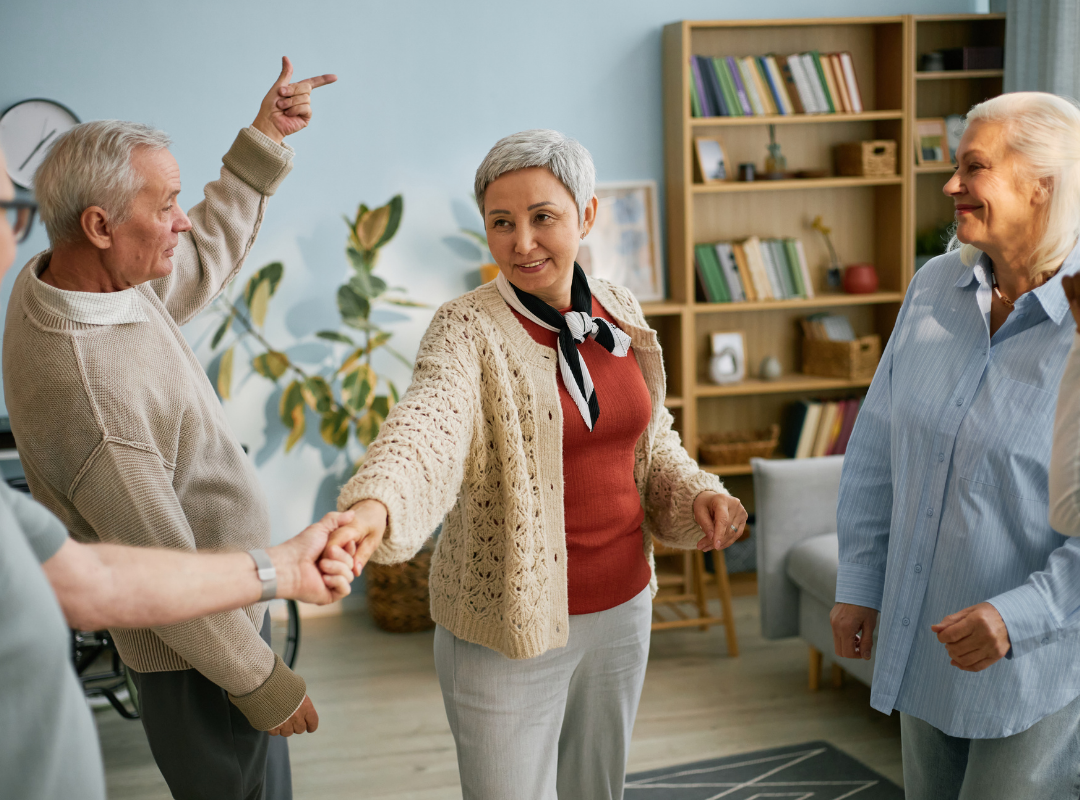
Group activities for elderly adults work best when they have a clear purpose, flexible ways to participate, and opportunities for natural conversation. The right activity should reflect each person’s interests, abilities, energy, and preferred level of social interaction. It does not need to be complicated to feel meaningful.
A familiar song, shared art project, simple game, or relaxed discussion can create a comfortable point of connection. The ideas below can help you choose activities, adapt them for different needs, and recognize what makes a group experience welcoming and easy to follow.
What Makes a Group Activity Meaningful for Older Adults?
A meaningful group activity for older adults is easy to understand, adaptable to different abilities, connected to familiar interests, and structured so each person can contribute without pressure.
Participation can take many forms. One person may enjoy leading a conversation, while another prefers listening or simply being part of the group. A quieter role can still provide a sense of connection and belonging.
The National Institute on Aging explains that taking part in enjoyable social and leisure activities may support well-being as people age. The activity matters, but so does the experience surrounding it. A comfortable pace, welcoming space, and respectful facilitator can make the difference between feeling included and feeling overwhelmed.
Families sometimes focus on finding ways to keep a loved one busy. A more useful question is whether the activity gives that person a comfortable way to express an interest, share a thought, contribute to a task, or spend time with others.
Conversation-Based Activities That Help People Get to Know One Another
Conversation-based activities work well when they give everyone a shared topic. This removes the pressure of having to start a discussion from nothing. Familiar objects, songs, photographs, and traditions can make it easier for people to join at their own pace.
Reminiscence and Story-Sharing Activities
Photo discussions, favorite-song prompts, familiar sayings, and conversations about seasonal traditions can invite memories without turning the moment into a test. Specific prompts such as “What music did you enjoy?” are often easier to answer than broad requests to describe an entire period of life.
Shared Discussion Activities
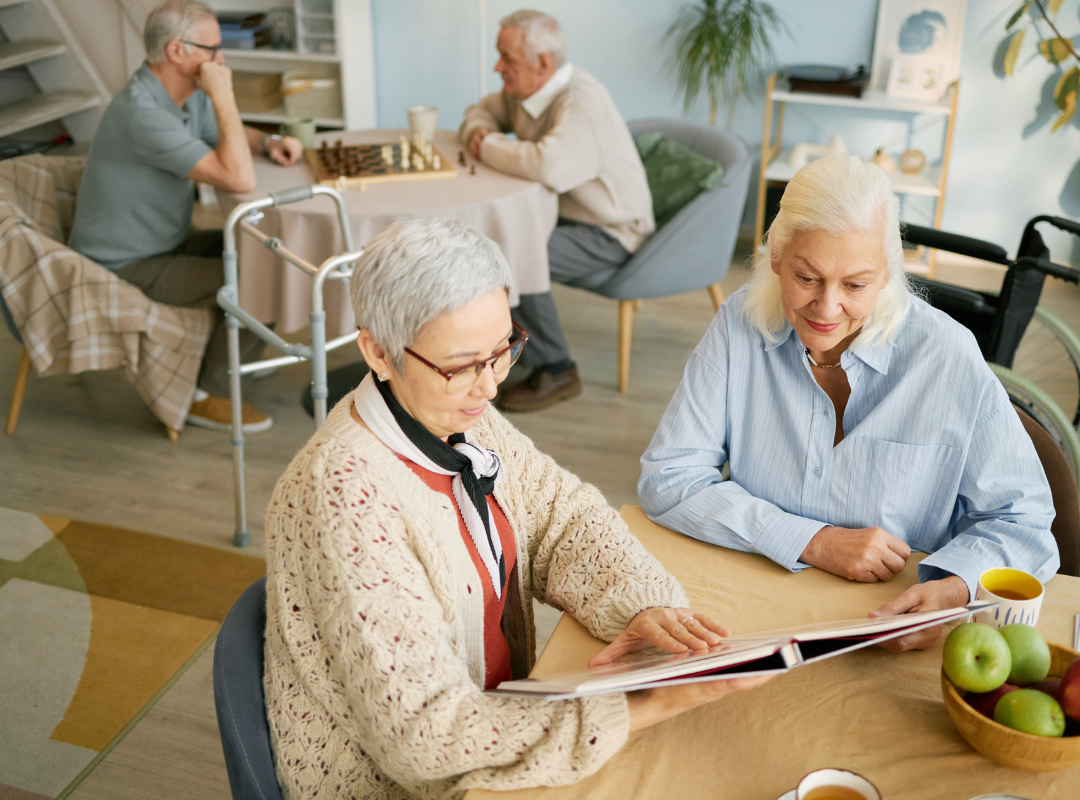
Book passages, local history, movies, travel memories, and music can provide natural starting points for conversation. Give participants enough time to respond and avoid calling on someone unexpectedly. Silence does not always mean the activity has failed. Some people need more time to think or may enjoy listening before they speak.
For families supporting someone with Alzheimer’s or another dementia, the Alzheimer’s Association recommends taking cues from the person’s interests, abilities, and mood when choosing shared activities. It also lists favorite music, photo albums, familiar books, movies, cards, and dominoes among the activities families may enjoy together.
Creative, Recreational, and Social Activities for Different Interests
Good group activities for the elderly reflect different personalities. Some people enjoy making something with their hands. Others feel more comfortable during a game, performance, outing, or shared entertainment experience.
Creative options may include collaborative art, seasonal crafts, flower arranging, group decorating, music-making, or sing-alongs. These activities can provide a shared goal without requiring constant conversation. The process often gives people something natural to talk about as they work.
Recreational and social choices may include:
- Trivia with familiar subjects
- Card games, dominoes, or bingo variations
- Group movie screenings
- Small celebrations or music gatherings
- Outings connected to shared interests
Avoid assuming that a particular activity appeals to everyone simply because of age. A person’s former hobbies, work, family traditions, music preferences, and social style often provide better clues. Offer choices when possible, then observe which experiences seem to hold the person’s interest.
Movement-Based Group Activities With Flexible Ways to Participate
Movement-based group activities can include seated and standing options. Gentle stretching, rhythm activities, walking groups, scarf games, seated movement, and dance-inspired sessions can all be adjusted according to a person’s abilities.
The Centers for Disease Control and Prevention recommends that adults age 65 and older work toward at least 150 minutes of moderate-intensity aerobic activity each week, while people who cannot meet the full recommendation should be as active as their abilities and conditions allow.
A group setting can help people feel social, but families should still look for appropriate pacing, seated alternatives, clear demonstrations, and opportunities to pause. Any physical activity should also follow guidance already provided by the person’s healthcare or rehabilitation professionals.
For more ideas related to everyday movement, read Exercise for Seniors Over 60 for Better Daily Strength.
How to Adapt Group Activities for Different Abilities
A successful activity does not require everyone to complete the same task in exactly the same way. Adaptation allows people with different mobility, memory, sensory, energy, and social needs to take part together.
A practical four-part framework can help:
- Simplify the steps. Give one clear direction at a time.
- Offer different roles. Let people answer, sort, choose, hold materials, observe, or assist.
- Adjust the pace. Allow extra response time and avoid rushing.
- Reduce unnecessary demands. Limit noise, clutter, complicated materials, and too many choices.
For someone with limited mobility, participation may mean selecting colors for a group art project. A person who finds large groups tiring may engage more in a small gathering. Someone with changing memory abilities may benefit from familiar songs, repeated instructions, and visible examples.
Simplifying a group activity for elderly participants should never make it feel childish. Use adult interests, respectful language, and materials that preserve dignity. The goal is to make participation more accessible, not to remove meaning from the experience.
Group Activity Selection Table
The same activity can lead to very different experiences depending on the group size, environment, instructions, and available roles. This table can help you match an activity to the person instead of expecting the person to fit the activity.
| Participant Preference or Need | Activity Type to Consider | Possible Adaptation | What to Observe |
| Enjoys conversation | Story prompts, music discussions, relaxed social gatherings | Use one clear topic at a time | Whether conversation feels natural |
| Prefers hands-on participation | Art, flower arranging, sorting, or decorating | Prepare and organize materials in advance | Whether the person remains interested |
| Has limited mobility | Seated movement, trivia, music, or tabletop games | Offer seated options | Whether participation feels comfortable |
| Becomes overwhelmed in large groups | Small-group games or creative activities | Reduce noise and group size | Whether the person appears more at ease |
| Has changing memory abilities | Familiar songs, simple games, or reminiscence | Repeat instructions calmly | Whether the activity avoids frustration |
| Enjoys purpose-driven tasks | Collaborative projects or event preparation | Assign one manageable role | Whether the person feels included |
No single response tells you everything. Look for patterns over time. A person may be quiet during one activity but become engaged during another that better matches a familiar interest.
How to Plan an Activity That Is Easy to Follow
An easy-to-follow group activity has a clear goal, few steps, visible materials, flexible participation, and a facilitator who can adjust the pace.
Preparation can prevent many common frustrations. Gather the materials before the group begins, demonstrate the first step, and use familiar words. Keep the length flexible so the activity can end naturally if attention or energy begins to fade.
Confusion may come from the setting, not the idea itself. A game can become difficult when several people speak at once. A craft may feel overwhelming when too many supplies are placed on the table. A discussion may stall because the question is too broad.
Before starting, check five details:
- Is the purpose clear?
- Can the instructions be given one step at a time?
- Are the materials easy to see and handle?
- Can people join in more than one way?
- Is there a simple alternative if the original plan does not work?
A backup option might be as simple as moving from a structured game to music, conversation, or quiet observation. Flexibility keeps the experience positive without making anyone feel that they failed.
What Families Should Look for in a Senior Living Activity Program
A full activity calendar does not automatically mean that every resident will feel engaged. Families should look at how activities are chosen, introduced, adapted, and supported.
Ask whether programs reflect resident interests and include both quiet and social choices. Find out whether seated alternatives or smaller groups are available for people who find movement or busy spaces difficult. You can also ask how activities are adjusted when a resident’s needs or preferences change.
The physical setting matters as well. Comfortable activity rooms, social areas, and community amenities can support different types of participation. Spaces used for movement, games, art, movies, or conversation should suit the purpose of the activity.
Care needs may also shape which types of encouragement or adaptation are useful. Families exploring Personal Care and Memory Care can ask how each level of care supports daily routines and participation.
You can use the Lifestyle Assessment to think through a loved one’s interests, routines, preferences, and ideal social environment before comparing options.
Explore Connection and Daily Engagement at Oak Leaf Manor South
At Oak Leaf Manor South in Millersville, Pennsylvania, residents can take part in experiences such as creative art workshops, fitness classes, game nights, movie screenings, spiritual and religious services, and excursions to local museums and restaurants. Well-equipped activity rooms, inviting social spaces, and community event rooms provide settings for different interests and levels of participation.
As you explore Personal Care or Memory Care, consider how the available activities may fit your loved one’s routines, abilities, and social preferences. Schedule a tour to see the community spaces and ask how activities can be adapted. You may also call 717-872-9100 to discuss what type of daily engagement could feel most natural for your family member.
Frequently Asked Questions
What are some group activities for the elderly that encourage conversation and participation?
Music discussions, reminiscence prompts, simple games, collaborative art, book discussions, and small social gatherings can encourage participation. Activities built around a shared object, question, or task often make conversation easier. People can contribute by speaking, creating, listening, or helping. Offering several ways to join keeps the experience welcoming.
How can group activities for elders be adapted for different mobility and ability levels?
Group activities for elders can be adapted through seated options, simpler steps, slower pacing, smaller groups, and different participant roles. Materials can also be made easier to see, reach, or handle. Some people may complete the main task, while others choose items or observe. The activity should change to fit the participants, not the other way around.
What makes a group activity for elderly participants easy to follow?
A group activity for elderly participants is easier to follow when it has one clear purpose and only a few steps. Instructions should be brief, demonstrated when possible, and repeated calmly if needed. Familiar materials and a comfortable pace can reduce confusion. Flexible stopping points also allow the activity to end before it becomes tiring.
What are meaningful activities to do with elderly family members in a group setting?
Meaningful activities to do with elderly family members include listening to favorite music, looking at family photographs, preparing a familiar recipe, playing cards, creating art, and sharing stories. Choose an activity connected to the person’s interests or traditions. The experience does not have to produce a perfect result. Shared attention and comfortable participation often matter most.
How can caregivers choose activities to do with elderly people who have different interests?
Caregivers can choose activities to do with elderly people by learning about each person’s preferences, routines, and past interests. Offer choices that allow people to engage in ways that feel comfortable. Watch for signs of interest, ease, frustration, or fatigue during the activity. Use those observations to shape future choices instead of relying on a one-size-fits-all plan.
Oak Leaf Manor and all the care providers were such a gift to dad and I. The staff was always friendly, patient, competent, caring, and quick to respond to questions or issues. When dad was brought back from the hospital after the cancer diagnosis, the support from the Oak Leaf staff was phenomenal.
Kathleen Morgan