717.872.9100
 Millersville, PA



Easy crafts for seniors with dementia are simple, safe, low-pressure activities that encourage creativity, comfort, and connection without requiring a perfect finished result. The best options use familiar materials, clear steps, and flexible outcomes so your loved one can participate at their own pace.
For many families, crafts become more than a way to pass the time. With an estimated 7.4 million Americans age 65 and older living with Alzheimer’s dementia in 2026, meaningful daily engagement matters for many households. Oak Leaf Manor South in Millersville, PA, supports creative engagement through Memory Care, Personal Care, and meaningful activities.
What Makes a Craft Dementia-Friendly?
A dementia-friendly craft is simple to start, easy to adapt, and comfortable to stop at any time. The goal is not to create something perfect. The goal is to help your loved one feel engaged, included, and successful in the moment.
The Alzheimer’s Association estimates that 7.4 million Americans age 65 and older were living with Alzheimer’s dementia in 2026. The organization also notes that art can support self-expression and engagement for people living with Alzheimer’s, even as dementia progresses. That matters because a person may still respond to color, texture, music, familiar images, or the act of making something, even when following complex directions becomes harder.
Keep the Steps Simple
One-step or repeatable crafts usually work best. Try activities like brushing paint across paper, placing stickers on a card, sorting colorful shapes, or gluing pre-cut pictures onto a page.
Focus on Process Over Finished Results
A craft does not need to look a certain way to be meaningful. If your loved one enjoys choosing colors, touching materials, or sitting with you while you create together, the activity is already serving a purpose.
Choose Safe, Comfortable Materials
Use supplies that are easy to hold and simple to clean up. Washable markers, large paper, glue sticks, soft clay, large stickers, and pre-cut shapes are often easier than small beads, sharp scissors, or complicated kits.
Easy Craft Ideas for Seniors With Dementia
Easy crafts for seniors with dementia should feel familiar, flexible, and manageable. Start with activities that match your loved one’s current attention span, hand comfort, and mood that day.
Coloring and watercolor painting are often good starting points because they allow choice without many rules. Collage making can also work well, especially when you use pre-cut images of flowers, pets, family themes, seasons, or familiar places.
Soft clay or dough shaping may be calming for someone who enjoys tactile activities. Simple card-making can help your loved one feel connected to birthdays, holidays, or family moments. Flower pot decorating, paper crafts, and memory box decorating can also create gentle opportunities for expression without requiring the person to explain every choice. Start with the activity that feels closest to what your loved one already enjoys, then simplify the steps until it feels calm and manageable.
Art Activities for Dementia Patients by Need
The best art activities for dementia patients often depend on what your loved one needs in that moment. Someone who feels restless may need a hands-on activity, while someone who feels tired may do better with a quiet, simple project.
| Need or Situation | Craft Type to Try | Why It May Help |
| Restlessness | Sorting, soft clay, simple collage | Gives the hands something simple and repetitive to do |
| Low energy | Coloring, watercolor, sticker cards | Requires minimal setup and allows quiet participation |
| Enjoys memories | Memory boxes, photo collages | Encourages recognition and connection without pressure |
| Likes nature | Flower pot decorating, leaf art | Brings seasonal color and texture into the activity |
| Social engagement | Shared cards, group collage | Allows participation alongside others without needing conversation |
This kind of matching can make craft activities for dementia patients feel less frustrating. You are not trying to push one “right” activity. You are choosing an option that fits the person in front of you today.
How to Set Up Craft Activities Without Causing Frustration
A calm setup can make the difference between a peaceful activity and an overwhelming one. Put out only a few supplies at first, demonstrate one step, and give your loved one time to respond before offering more choices.
The National Institute on Aging recommends adapting activities for people with Alzheimer’s by keeping tasks manageable and matching them to the person’s abilities. For crafting, that may mean sitting beside your loved one, starting the first step together, and allowing the activity to end naturally when attention fades.
Try to avoid correcting the final result. If the card is uneven, the colors mix, or the collage goes in an unexpected direction, let it be. What matters most is whether the activity feels calm, familiar, and respectful.
Craft Safety Tips for Seniors With Dementia
Craft safety matters because dementia can affect judgment, attention, coordination, and the ability to use tools as intended. Choose supplies that reduce risk while still allowing your loved one to participate with dignity.
Helpful safety considerations include:
- Use non-toxic, washable materials when possible.
- Avoid small items if swallowing or misplacing objects is a concern.
- Skip sharp tools unless you can closely supervise.
- Keep the workspace clear to reduce spills, clutter, and tripping hazards.
- Match the activity to current ability, not past ability.
Safety does not mean removing all creativity. It means shaping the activity so your loved one can focus on color, texture, motion, and connection without unnecessary stress.
Seasonal and Spring Craft Ideas for Dementia Patients
An easy spring craft for dementia patients is a paper flower collage because it uses simple shapes, bright colors, and flexible steps. Your loved one can choose colors, arrange petals, or simply help place pieces on the page.
Other simple spring ideas include painted flower pots, butterfly coloring pages, bird-themed cards, pressed flower art, and simple wreaths made with pre-cut paper flowers. These art activities for seniors with dementia can bring seasonal color into the day without requiring a long attention span or detailed instructions.
When Crafting Becomes Part of a Larger Memory Care Routine
Crafting can be one meaningful part of a supportive daily rhythm. For someone living with dementia, creative activities may work best alongside familiar routines, social opportunities, movement, meals, rest, and personal support.
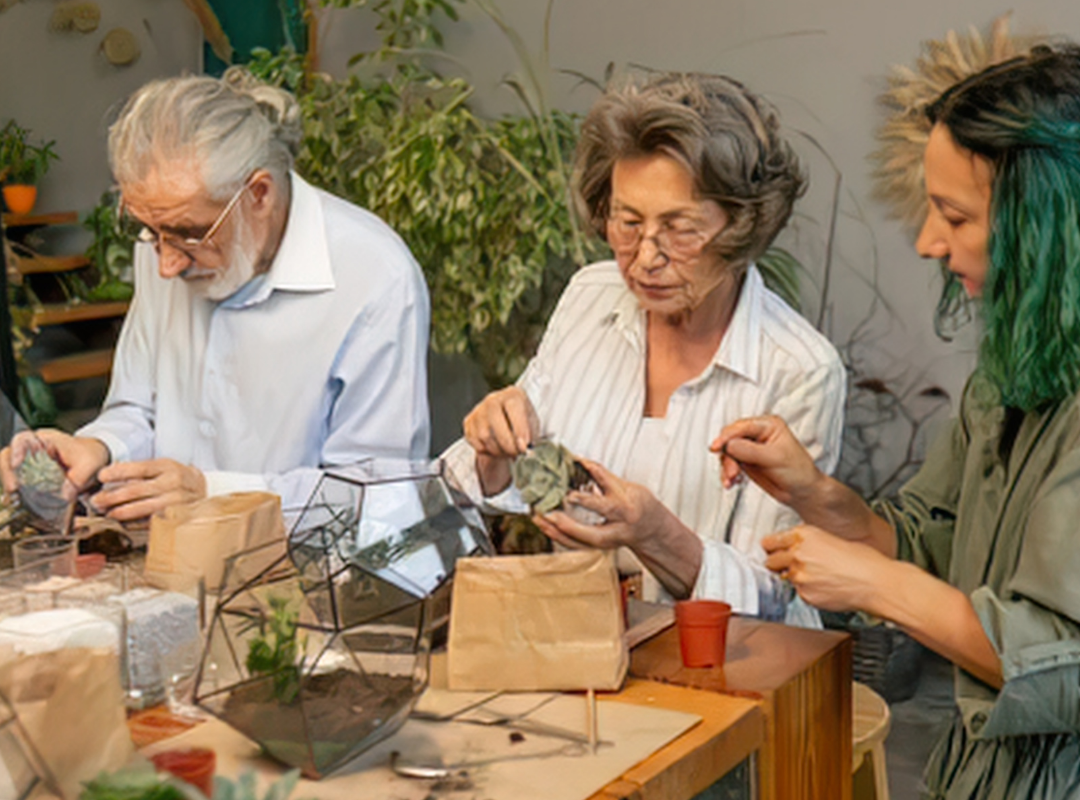
At Oak Leaf Manor South, Memory Care and Personal Care are available for families exploring a more structured setting. Creative art workshops, well-equipped activity rooms, inviting social spaces, fitness classes, game nights, movie screenings, dining, medication assistance, housekeeping, laundry services, transportation, community and event rooms, and excursions to local Millersville attractions may all help support engagement in different ways.
If you are still caring for a loved one at home, you may also find it helpful to continue learning through Oak Leaf Manor South’s related resource, Coping With Dementia Parent Care: Gentle Ways to Help, which supports families in thinking through daily care and next steps.
Explore Memory Care Support at Oak Leaf Manor South
Choosing easy crafts for seniors with dementia can help you create more calm, connection, and purpose in daily life. It can also help you notice when your loved one may benefit from a more supportive routine, especially if activities at home are becoming harder to manage safely or consistently.
Oak Leaf Manor South is located at 2101 Wabank Rd. in Millersville, PA. If you are unsure what level of care may fit your loved one’s needs, you can take the care assessment, contact Oak Leaf Manor South, or schedule a tour to learn more about Memory Care and Personal Care in a setting designed to support comfort, engagement, and daily life.
Frequently Asked Questions
What crafts are good for dementia patients?
Good crafts for dementia patients are simple, safe, and flexible. Coloring, watercolor painting, collage making, soft clay shaping, card making, flower pot decorating, and memory box decorating are often good options. Choose activities with few steps and materials that are easy to hold. The goal is participation and comfort, not a perfect finished project.
What are some easy crafts for seniors?
Easy crafts for seniors include coloring pages, greeting cards, paper flowers, photo collages, painted rocks, sticker art, and simple seasonal wreaths. These activities can be adjusted based on vision, hand strength, attention span, and personal interest. For seniors with dementia, it helps to prepare supplies ahead of time and offer one step at a time. Keep the activity short, calm, and open-ended.
Why do dementia patients wander at night?
Dementia patients may wander at night because of confusion, restlessness, disrupted sleep patterns, unmet needs, or changes in routine. Nighttime can also feel more disorienting when the environment is quiet or dim. If wandering becomes frequent or unsafe, speak with a qualified healthcare professional about safety steps and possible causes. A consistent evening routine and safer surroundings may help reduce risk.
What is the easy spring craft for dementia patients?
A paper flower collage is an easy spring craft for dementia patients because it uses bright colors, simple shapes, and flexible steps. You can prepare pre-cut petals, leaves, and stems so your loved one can arrange and glue the pieces. Painted flower pots and spring greeting cards are also simple seasonal options. Keep the focus on choice, color, and enjoyment.
How do you choose art activities for seniors with dementia?
Choose art activities for seniors with dementia by looking at their current mood, attention span, hand comfort, and personal interests. A restless person may respond better to sorting or soft clay, while someone with low energy may prefer coloring or sticker cards. If an activity causes frustration, simplify it or pause. The right activity should feel supportive, not like a test.
Oak Leaf Manor and all the care providers were such a gift to dad and I. The staff was always friendly, patient, competent, caring, and quick to respond to questions or issues. When dad was brought back from the hospital after the cancer diagnosis, the support from the Oak Leaf staff was phenomenal.
Kathleen Morgan